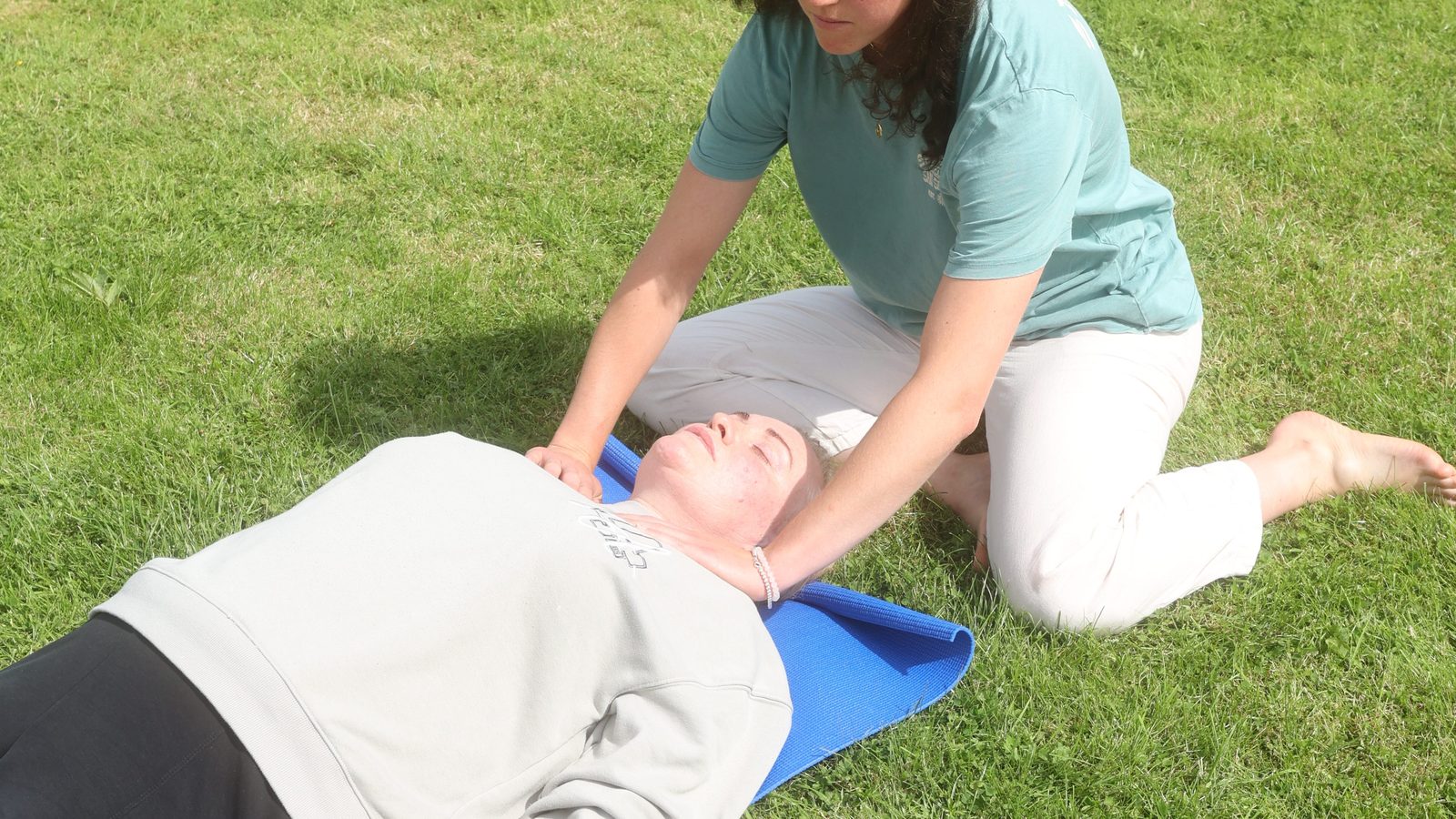
The Merging Pattern (Oral Character Structure): Filling From the Inside
Feel called to share this work? Explore our 200-hour conscious connected breathwork facilitator training →
New to breathwork? Join Pat's free weekly online Community Breathe
Quick answer: The Merging pattern, called the oral character structure by Reich and Lowen, forms between about six months and two years, when a child's needs for feeding, holding and attention are only partly met. The adult carries a quiet hunger: either openly needy, or a "giver" who looks after everyone and claims to need nothing. The body tends to be undercharged and the breath has a weak inhale. Its healing is the return to your own nourishment.
You might know the feeling of giving until there's nothing left. Warm, open, tuned to everyone else, and quietly running on empty, hoping someone will notice and fill you back up. That's the felt sense of the Merging pattern.
It's the second of the five Reichian character types, and it's often described as the most common pattern in the West. Coaching rooms, and breathwork rooms, are full of it. You can't fill a client from a cup that's empty, so as with every pattern, I go here in myself first.
Steven Kessler calls it Merging. Reich and Lowen called it oral, because it forms around the mouth, feeding and being filled.
How does the Merging pattern form?
It forms in the first couple of years, around being fed, held and filled. The child's nervous system is reaching, and the world reaches back. Or it doesn't. It can come from:
- A well that ran dry: not enough milk, not enough holding, in the early months.
- A mother who was there but couldn't fill the child, through her own depression, illness, grief or exhaustion.
- Love that came and went, so the child was never quite filled before it withdrew.
The needs are real and the cries are real, but the response is partial. The child learns to ask, and learns that asking doesn't reliably bring a yes. The conclusion: there will never be enough. In short: "If I ask, no one comes."
Lowen wrote that "all depression rests on a loss of mother love." The hunger doesn't go away. It becomes a kind of black hole inside.
What are the core beliefs and the wound underneath?
- "There's never enough."
- "I'm not enough. I'm deficient."
- "You have to do it for me."
- "If I ask for what I need, it doesn't count."
Underneath everything is an empty ache, a low hunger that never quite settles. Under the ache, shame: the sense that the need itself is too much. Under the shame, a buried anger at not being filled, rarely let out.
Attention runs outward, to other people rather than inward. You read what others need before you feel what you need. The heart does the organising, because it became the way to be fed.
How does the Merging pattern live in the body?
This is where the idea of charge really helps. Every body builds energy through breath and feeling, and every pattern is a childhood answer to what to do with it. Some bodies grip to contain it. The Merging body tends to do the opposite: it's soft, with less tone, and it leaks charge as fast as it builds.
- A soft, rounded build, or tall and thin, as if it never fully filled out.
- A chest that sinks, shoulders rounded forward, prominent collarbones, the head moving ahead of the body.
- Soft, seeking eyes, sometimes described as puppy eyes, reaching for contact.
- Weak legs, thin ankles, locked knees and poor grounding.
The breath is shallow, with a collapsed inhale and long exhales that empty you out. Because the chest is sunk, taking in is hard and the breath gives itself away. The inhale is the first place the hunger shows, and the first place you learn to receive.
How does it show up in life and relationships?
In daily life you give until you're empty, then you crash. Under pressure you collapse into tears, tiredness or a puddle of need. You reach for something to fill you: food, drink, talk, another person. You care for everyone else and forget to feed yourself.
In relationships, you come alive with people and struggle to be alone. Closeness is what you want most, and what leaves you most drained. You give to get, and resentment builds when it doesn't come back. You please, you cling, you abandon yourself to keep the connection.
The two faces of Merging
The pattern has two faces, and the second is easy to miss:
- The reacher: openly needy, clinging, asking the room to fill them.
- The giver: the need goes underground. "I don't need anyone. I fill you." Older texts call this the compensated oral type.
Same wound, same hunger. The giver just found a safer way to stay close. Kessler described a loop he called "the cycling": pretend strength, then over-giving from an empty cup, then burnout and collapse into the needy pole, then rebuilding the mask and going again.
What does this look like in real life?
I've seen many people who were chronically needy without realising it. Some were openly needy. Others were the compensating type, withholding their needs and looking after everyone else. Either way, the work was the same: helping them actually connect to their needs, and learn they were allowed to have them.
Merging was part of my own story too. When I first came to this work, my strongest pattern was Enduring, but orality, the Merging pattern, was also there for me. A lot of my work, alongside Enduring, has been about noticing my automatic urge to put other people first and overlook my own needs, and learning to ask for what I want.
Merging or Enduring?
The two form close together and can both look like collapse, so they're easily confused. The difference is direction and charge. Merging reaches out to be filled; Enduring holds in and presses down. Merging is undercharged and drains; Enduring is overcharged and compresses. Leaning toward you says Merging. Bracing against you says Enduring. Many people carry both. Read more in The Enduring Pattern (Masochistic Character Structure).
What are the gifts of the Merging pattern?
The same open heart that made you reach is a real gift. Learn to fill from the inside, and it no longer costs you everything:
- You radiate warmth and love, enough to shift a whole room.
- You read what people feel and need before they say it.
- You're a natural at intimacy, relationship and building community.
- You know how to enjoy life: the senses, pleasure, the delicious ordinary.
The return to nourishment: 3 daily tools and a breath practice
For the Merging pattern, the return is nourishment: to fill from the inside and stand on your own feet, so you can let people in without needing them to fill you. The right to need without shame, and to receive without earning it first.
You don't reach your way to fullness. You fill from the inside. And the first thing that meets you there is usually the emptiness you've been reaching to avoid, which is why staying with it matters.
Three simple daily tools:
- Ask directly, once a day. Name one real need out loud, plainly, and let it be met. Notice when you say "I can't, it's too hard" and wait for someone to rescue you, and try the direct ask instead.
- Receive on purpose. Let someone give to you, and take it in without immediately paying it back or earning it.
- Feed yourself well, and strengthen your legs. Food, rest, beauty and the senses, given to you by you. Strength work for the legs, even simple squats, builds the container this body never grew.
A line I give people for this pattern: "It's okay to need. I have a right to my need."
A breath practice for the Merging pattern: the receiving breath
The Merging pattern empties out and struggles to take in. This breath does one thing: it teaches you to receive.
- Sit or lie down with your feet flat, one hand on your chest and one on your belly.
- Breathe in slowly through the nose and let the inhale fill you, chest and belly both.
- At the top, pause. Hold the fullness for a moment before you let any of it go.
- Exhale slowly, but don't give it all away. Keep a little back for yourself.
- When you rush to empty, that's the pattern. Slow the inhale, hold the top. Each hold is the rep.
Five minutes a day is plenty to begin with.
How do you work with the Merging pattern in breathwork?
Breathwork is an umbrella term, like fitness, and this pattern shows why. Merging, like Leaving, tends to be undercharged. A big, emptying, cathartic session can look powerful, but for this structure it can be another hit from outside, or simply drain an already low tank. Discharge can be the old pattern wearing a breathwork costume. People with this pattern who've done stronger breathwork, especially in a big group, often tell me it was very overwhelming, and that it took them further away from themselves rather than closer. That's not a failure on their part. It's a mismatch between the breath and the body.
So in a conscious connected journey, the aim shifts to fill and hold. Ground the feet and legs before the breath builds. Use an inhale-led, unforced connected breath, keeping a little of every exhale. Let the arms reach and be met. Build gently and finish with a long integration, so the body ends fuller than it began. Watch the charge: this structure can get light-headed or faint if charge rises fast, so ground before intensity.
The facilitator's trap with this pattern is rescuing. The Merging client will pull for it, and the urge to rescue is the pattern recruiting you as its regulator. The skill I pair with it is reflective presence: staying warm and curious without rushing in to fix. Your own boundary is the teaching. A kind no shows them a no can keep love in the room.
A word of caution
Don't weaponise this material, and don't treat it as a diagnosis. Recognising yourself here doesn't mean something's wrong with you, and you don't have to get past it. It's a loose map, and awareness is where change begins.
Know the edge, too. Active addiction, clinical depression and eating disorders can sit under this wound, and they need more than coaching or breathwork. Work alongside a therapist, GP or specialist service. And go gently: this is slow work, it's not sexy, and it's built on small, consistent commitments to showing up for yourself.
Further reading: for more on the Merging pattern, I recommend Alexander Lowen's The Language of the Body and Steven Kessler's The 5 Personality Patterns.
This article is educational. It isn't therapy, a diagnosis or medical advice. If you're struggling, please speak to your GP or a mental health professional. Before trying conscious connected breathwork, read our breathwork contraindications guide.
Frequently asked questions
What is the Merging pattern?
The Merging pattern is Steven Kessler's name for the oral character structure described by Reich and Lowen. It forms between about six months and two years, when a child's needs are only partly met, and leaves a lasting hunger to be filled by others. Its healing is learning to nourish yourself from the inside.
What is a compensated oral type?
It's the "giver" face of the Merging pattern. Instead of openly reaching, the need goes underground: "I don't need anyone, I'll look after you." It's the same hunger in different clothes, and it often cycles into over-giving, burnout and collapse before the mask goes back on.
What are the signs of the oral character structure?
Common signs include a sunken chest, rounded shoulders, soft reaching eyes, weak or locked legs and a breath with a weak inhale and long exhale. In life it can look like giving until empty, struggling to be alone, people-pleasing and reaching for food, drink or people to fill you.
What breathwork helps the Merging pattern?
Breath that builds and holds charge rather than emptying it. Slow, full inhales, a pause at the top and keeping a little of each exhale help. In conscious connected breathwork, ground first, keep the breath inhale-led and unforced, and allow a long integration so the body ends fuller.
What's the difference between Merging and Enduring?
Both can look like collapse, but Merging reaches out to be filled and drains energy, while Enduring holds in, braces and compresses it. Merging is undercharged; Enduring is overcharged. They form close together and often show up in the same person.
Two ways to go deeper
- Train as a facilitator. Journey The Breath is our 200-hour conscious connected breathwork facilitator training: six months online, three days together in Galway, then six months of support. We've trained 160+ facilitators in more than 20 countries. The next cohort starts on 21 March 2027, and the following intake on 15 August 2027.
- Breathe with us. Community Breathe is our online breathwork community, with the next sessions starting on 9 January 2027. A good place to practise receiving, with others around you.
Keep reading: Reichian Character Types: An Introduction · Previous: The Leaving Pattern (Schizoid) · Next: The Enduring Pattern (Masochistic)
