
The Rigid Pattern (Rigid Character Structure): Letting the Real You Be Seen
Feel called to share this work? Explore our 200-hour conscious connected breathwork facilitator training →
New to breathwork? Join Pat's free weekly online Community Breathe
Quick answer: The Rigid pattern is the last of the five character structures to form, between about three and a half and five years old, when love starts to come with conditions. The child learns they're loved for what they do rather than who they are, so the heart locks behind a strong chest and performance takes over. The adult is capable, polished and hard to truly reach. The breath catches at the top and rarely fully lets go. Its healing is the return to being seen.
You might know the feeling of having it all together. Polished, capable, on time, doing it right, and quietly wondering if anyone has ever actually met the real you. That's the felt sense of the Rigid pattern.
It's the fifth of the five Reichian character types. You can't help a client be seen if you're still performing yourself.
On the names: this is one pattern where the modern and classic names mostly agree. Lowen and Steven Kessler both call it Rigid. In older writing you'll also see it described as the phallic-narcissistic character, a term from Reich, and Lowen grouped related structures, including what older texts called the hysterical character, under the rigid heading. Like the other old names, these are historical labels, not diagnoses.
How does the Rigid pattern form?
It forms in the late years of early childhood, between about three and a half and five. By now the body and the will are developed. The question the child is living is whether they're loved for who they are, or for what they do. The pattern can come from:
- Love that came for performance, and went cool for the rest.
- A young heart that reached out and was shamed or pushed away.
- A world that rewarded the look and the result, not the feeling.
Performance gets valued over feeling, and love and sexuality can get confused. The message is something like: you can be autonomous, but you can't be emotional. Image becomes safer than essence.
The conclusion: be impressive, because the real you isn't enough. "I must be perfect. What's right matters more than what's true." And the inner critic moves in and stays.
What are the core beliefs and the wound underneath?
- "Image matters more than I do."
- "I am loved for what I do."
- "Mistakes are not allowed."
- "If they saw the real me, they would leave."
The wound is that the heart isn't safe. It reached out and got pushed away, so it locked behind a strong chest and learned to perform instead. Somewhere young, feeling itself became the weakness.
On top sits anxiety, and an inner critic checking everything. Under the anxiety, a held anger at having to be perfect. Under the anger, shame, and the ache of never being known. Underneath the drive is someone who still longs for closeness and can't yet admit it. People with this pattern can find it hard to cry, and often use achievement to outrun the feeling of not being enough.
How does the Rigid pattern live in the body?
- Trim, fit and well proportioned, often athletic. Erect, tight and taut.
- A chest held high and forward, with the heart locked behind it.
- Bright, lively eyes, and a face that can look set or stiff. A set jaw, holding the held breath and the held words.
- Energy held in a tube of tension, with a core that can feel hollow.
- Tension in the jaw, the chest, the hips and lower back, and locked knees.
This pattern carries a lot of charge, more than any other in some teachings, but it's contained. High voltage, held tight.
There's also a split: the heart armours while the wanting stays open. So love and desire can get lived in separate rooms, love without wanting and wanting without love. The healing is to let warmth and desire back into the same room.
The breath is held high and tight, catching at the top of the inhale. The chest stays forward and braced, and the breath rarely drops into the heart or the belly, or fully exhales. The breath is the first place the holding back shows, and the first place the heart starts to come forward.
How does it show up in life and relationships?
You do it right, you look the part, you deliver. Under pressure you tighten, control and push through. You're happiest when there's something to achieve. You manage your feelings so well you can lose touch with them.
In relationships you're capable and impressive, and hard to truly reach. You let people close up to the point where the heart would show. You hold back the messy, real, unmanaged parts of you.
What does this look like in the room?
The Rigid client often arrives looking like the most together person in the room. Here's an illustration, a composite of a moment rather than one real client.
Imagine a man who gives you a clean, articulate account of his week. Nothing is wrong. Everything is handled. You can feel how polished it is.
"That was beautifully put. What did you feel as you said it?"
A blank. Then, quieter: "I'm not sure I felt anything."
"Let's stay right there. Not the story. The nothing."
That's where the work lives. Not in praising the performance, and not in tearing it down, but in being unimpressed by the polish and moved by the person underneath. When the performance cracks, even slightly, that's real. Stay there.
One thing to know: insight alone changes very little with this pattern. You can name a feeling perfectly and never have felt it. And as real feeling surfaces, there's often a worse-before-better dip. That's progress, not relapse.
What are the gifts of the Rigid pattern?
The same drive that learned to perform is a real gift. Let the heart come forward and the drive is still there, only now it serves who you are rather than how you look:
- You bring order, form and beauty where there was none.
- You're capable and driven, and able to make things real.
- You hold clear boundaries and clean structure.
- You're excellent at what you care about, with heart and skill together.
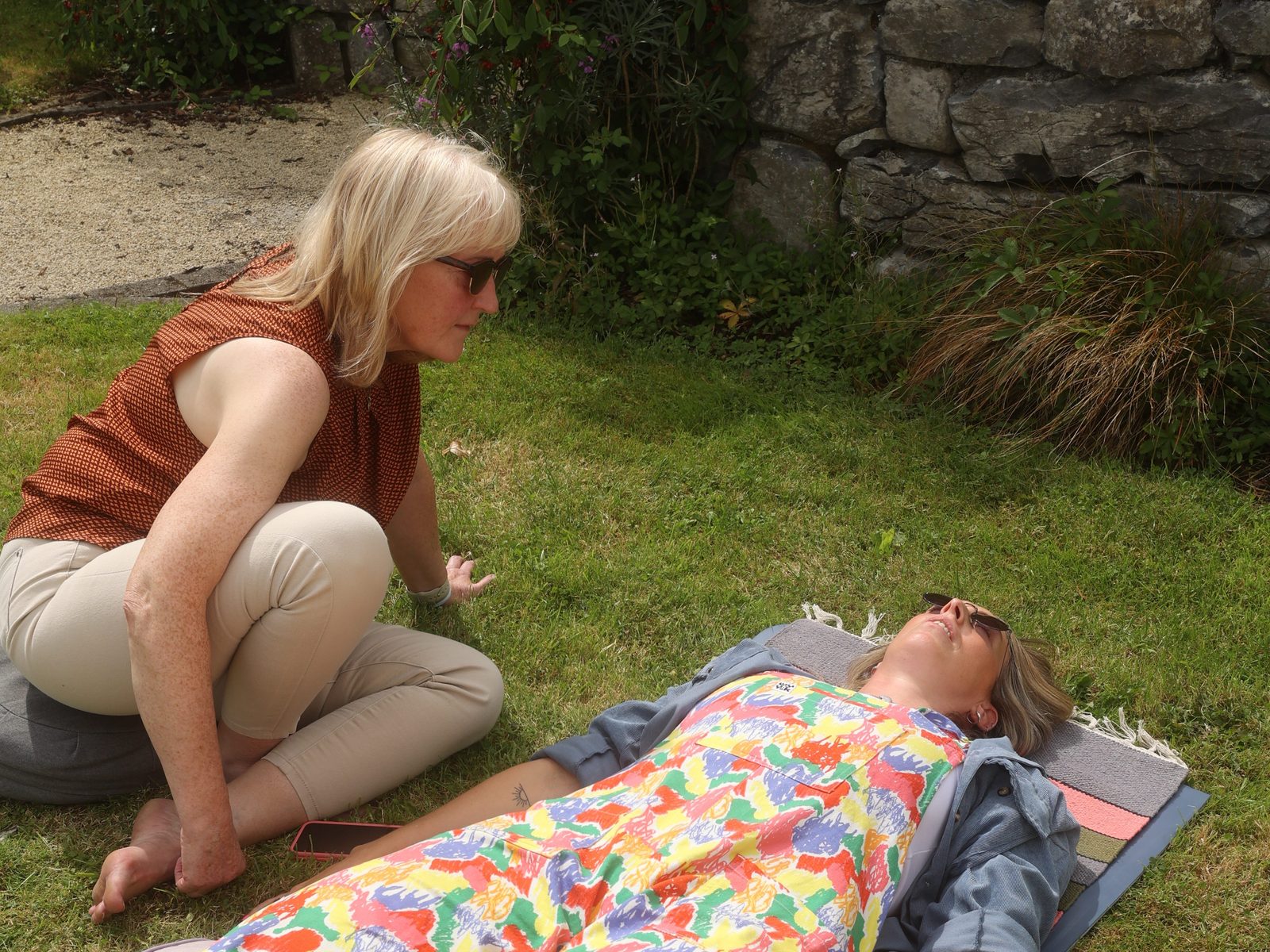
The return to being seen: 3 daily tools and a breath practice
For the Rigid pattern, the return is being seen: letting the real you be visible rather than the polished one, so someone can actually meet you. The return is from the idealised self to the undefended one, the real self that no longer needs to be impressive to feel worthy. To be seen, you first have to stop defending.
Being seen over looking good, because looking good kept you alone and being seen is what lets you be loved. You don't think your way to it. You feel your way to it. And the first thing that meets you there is usually the old fear of reaching out, which is why permission and warmth matter.
Three simple daily tools:
- Ask what you feel, not how you're doing. Once a day, stop and ask what you actually feel right now. Let one feeling be felt rather than managed, a breath longer than is comfortable. If tears come, let them.
- Be imperfect on purpose. Do one small thing badly and let it be fine. Leave something unfinished or unpolished.
- Show the real one. Let someone see you unpolished, before you're ready. Share one fear or tender thing you'd usually keep behind the wall.
A breath practice for the Rigid pattern: the softening breath
The Rigid pattern holds the breath high and tight. This breath does one thing: it lets you soften.
- Sit or lie down, and let the body be a little less held.
- Breathe down past the chest into the belly, slow and full.
- On each exhale, let something soften: the jaw, the shoulders, the hold. Let the exhale be long and complete, with a sigh or sound if it comes.
- Let the breath reach the heart, even if it feels unfamiliar.
- When you tighten back up, that's the pattern. Soften again. Each softening is the rep.
A lovely follow-on: lie down with one hand on your lower belly and one on your heart. On the inhale, press gently on the belly; on the exhale, gently on the heart. Continue until you can feel both centres at once.
How do you work with the Rigid pattern in breathwork?
Breathwork is an umbrella term, like fitness, and the Rigid pattern shows why matching matters. Like Enduring and Challenger, it tends to hold a lot of energy, held tight. People with this pattern have sometimes tried gentler practices and struggled to really connect. Just as often, they've turned breathwork into one more thing to get right, putting a lot of pressure on themselves to do it perfectly. That pressure is the pattern itself.
So the breath here is full exhale and release: long, complete exhales, allowing imperfection in the breath, letting it be ragged, and letting sound come if it wants to. The breath here is permission. Permission to be uncontained, even briefly. In a conscious connected session, softening helps too: jaw release, hip circles, letting the body get a bit messy.
And ask the question that scares this pattern: what do you actually want, not what should you want?
Go at the pace of their trust, not your curiosity. This is heart work and tender ground. If shame or an old memory floods, slow right down and stay kind. Warmth over praise: be moved by the person, not impressed by the polish.
A word of caution
Don't weaponise this material. Seeing yourself in the Rigid pattern doesn't mean something's wrong with you, and the irony is that this pattern can turn the map itself into another standard to meet. It's not a diagnosis, and you don't have to get past it or fix it perfectly. It's a loose map, and awareness is the first part of change.
Go gentle. This is slow work and it's not sexy. It's small, consistent commitments to showing up for yourself, making new choices and slowing things down.
Further reading: for more on the Rigid pattern, I recommend Alexander Lowen's The Language of the Body and Steven Kessler's The 5 Personality Patterns.
This article is educational. It isn't therapy, a diagnosis or medical advice. If anxiety, depression or old memories feel like more than you can hold, please speak to your GP or a therapist. Before trying conscious connected breathwork, read our breathwork contraindications guide.
Frequently asked questions
What is the Rigid character structure?
It's the last of the five character structures to form, between about three and a half and five, when love starts coming with conditions. The child learns to perform for love, the heart goes behind a held chest, and the adult becomes capable and polished but hard to truly reach.
What does phallic-narcissistic or hysterical character mean?
They're older names from the Reichian and bioenergetic tradition for patterns that Lowen grouped under the rigid structure. They're historical labels for body-based holding patterns, not diagnoses, which is why the simpler name Rigid is mostly used today.
What are the signs of the Rigid pattern?
A fit, upright, well-proportioned body, a chest held high, a set jaw, locked knees and a breath that catches at the top. In life: perfectionism, a strong inner critic, staying busy and achieving, managing feelings rather than feeling them, and letting people close only so far.
What breathwork helps the Rigid pattern?
Long, complete exhales, letting the breath drop out of the chest into the heart and belly, and permission for the breath to be imperfect, ragged or loud. The aim isn't to do it right. It's to soften enough to feel, and to be seen.
Is the Rigid pattern the same as perfectionism?
Perfectionism is one of the clearest signs of it, but the pattern goes deeper. It's a body-based holding that formed when love felt conditional, and underneath the drive to get it right is a longing to be loved for who you are, not what you do.
Two ways to go deeper
- Train as a facilitator. Journey The Breath is our 200-hour conscious connected breathwork facilitator training: six months online, three days together in Galway, then six months of support. We've trained 160+ facilitators in more than 20 countries. The next cohort starts on 21 March 2027, and the following intake on 15 August 2027.
- Breathe with us. Community Breathe is our online breathwork community, with the next sessions starting on 9 January 2027. A place to breathe without having to get it right.
Keep reading: Reichian Character Types: An Introduction · Previous: The Challenger Pattern (Psychopathic) · Back to the start: The Leaving Pattern (Schizoid)
