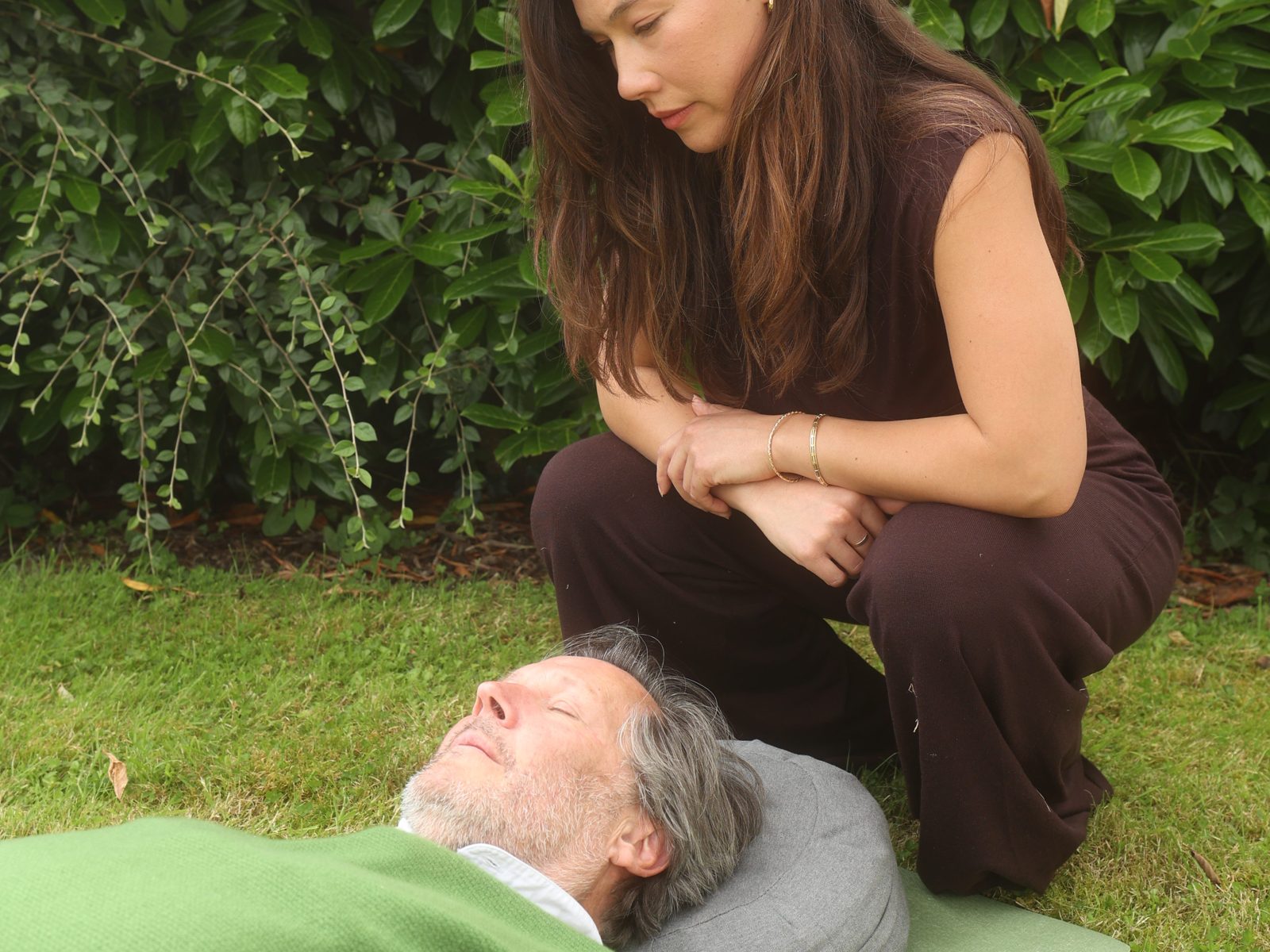
What Makes a Good Breathwork Facilitator? (And the Red Flags to Watch For)
Want to learn to hold this work well? Explore the 200-hour Journey The Breath facilitator training →
New to breathwork? Join Pat's free weekly online Community Breathe
Quick answer: A good breathwork facilitator doesn't need anything from you. Not your approval, not your admiration, not a big emotional release to prove the session worked. They've done their own inner work, so they can stay present and welcome whatever arises. A risky facilitator brings their own needs into the room and tries to make something happen.
People ask me all the time what separates a good facilitator from a risky one. They expect me to talk about technique, safety protocols or certifications. Those matter. But the real difference is quieter than that, and it starts long before anyone lies down on a mat.
A good facilitator doesn't need anything from you
When I sit with someone, I don't need anything from them. I don't need them to like me. I don't need them to approve of me. I don't need them to be impressed by me. I don't need them to have a specific type of experience.
I'm clear that I just need to be with them and welcome whatever arises.
That's the whole thing, really. If I bring too much of my own stuff into the room, it gets in the way of their process. Their breath becomes about my need to be a good facilitator, instead of about what's actually happening in them.
Why so many people get into this work for the wrong reasons
When someone tells me they want to become a breathwork facilitator, the first thing I want to know is why.
So many people become facilitators, therapists or coaches as a way of avoiding the work they need to do on themselves. It's easier to try to rescue and save other people than it is to go and do our own work. That's a very common pattern, and I say that with compassion, because most of us in this field have had some version of it.
What I tell people is this: if you can embody the work yourself, actually do the work, and come to a good place within yourself, the facilitation is easy. If you skip that beat, you'll never quite get there as a facilitator.
What I'd call out in the breathwork industry
There's a lot I love about how breathwork has spread. But there are things that bother me.
Sensationalism and performative releases
Social media rewards the big moments: the screaming, the sobbing, the dramatic catharsis. Sessions start to compete on intensity, and people start to judge their own journey by how big it was. That isn't how healing works. Often the most meaningful sessions are quiet ones.
Facilitators trying to make something happen
This is the one I'd most want to call out. When a facilitator doesn't feel enough in themselves, they push. They need the client to have a breakthrough, because the breakthrough proves they're good at this. That pressure lands on the client. It can push people past what their nervous system is ready for, and it puts the facilitator's needs at the centre of someone else's process.
Really, this work should be more gentle than it often looks online.
Signs of a good breathwork facilitator
- They screen you properly before your first session and talk about contraindications (see Breathwork Contraindications).
- They explain what to expect and agree consent and boundaries with you.
- They're as comfortable with a quiet session as a big one.
- They'd rather slow you down than speed you up.
- They help you integrate afterwards, not just release.
- They're honest about their scope and refer on when something is beyond it.
- They have their own regular practice, supervision and ongoing inner work.
Red flags to watch for
- The session feels like a show, or is being filmed for social media.
- You're encouraged to push harder when you're signalling you've had enough.
- There's no screening at all before you breathe.
- The facilitator seems to need you to have a particular experience, or seems disappointed when you don't.
- Big claims: that breathwork will cure you, or replace medical or psychological care.
For more on safety, read Is Conscious Connected Breathwork Safe?
Do you need a clinical background to be a good facilitator?
No. I've seen people from very different backgrounds who have a real gift for this. Our graduates include medical doctors and psychotherapists with decades of experience, and people with no clinical background at all.
What makes the difference isn't the background. It's an honest commitment to doing your own inner work and leaning into your own edges. When that's there, the rest tends to follow.
Frequently asked questions
What makes a good breathwork facilitator?
Presence without need. A good facilitator has done their own inner work, so they don't need your approval or a particular outcome from your session. Combined with proper training in screening, safety and trauma-informed practice, that lets them welcome whatever arises in you.
Is a bigger emotional release a better breathwork session?
No. Releases can be meaningful, but a session isn't measured by how dramatic it is. Many of the most important sessions are quiet: a softening, a memory, a feeling finally felt. A good facilitator doesn't push for catharsis.
How do I find a safe breathwork facilitator?
Ask about their training, hours and supervision, whether they screen for contraindications, and how they handle strong reactions. Notice whether they seem to need anything from you. If something feels performative or pushy, trust that.
Can a breathwork facilitator do harm?
Yes, which is why training matters. Pushing someone past what their nervous system can handle, skipping screening or ignoring contraindications can cause real distress. Breathwork is powerful, and it deserves a careful, gentle approach.
Want to become this kind of facilitator?
Journey The Breath is built around exactly this: your own inner work first, then the skills to hold others safely. It runs for six months online, ends with three days together in Galway, and gives you six months of support afterwards. We've trained 160+ facilitators in more than 20 countries, and the next cohort starts on 21 March 2027. Have a look at the Journey The Breath facilitator training and book a discovery call.
Related guides: How to Become a Breathwork Facilitator · Online vs In-Person Breathwork Facilitator Training
Related reading: trauma-informed somatic breathwork training and breathwork facilitator training Ireland.
