How to Become a Breathwork Facilitator: A Step-by-Step Guide
Ready to take the first step? Explore the 200-hour Journey The Breath breathwork facilitator training →
New to breathwork? Join Pat's free weekly online Community Breathe
Quick answer: To become a breathwork facilitator, build your own regular practice, do your own inner work, then complete a professional training with supervised sessions on real people, solid safety and trauma-informed teaching, and support after you qualify. Get insured and consider joining a professional body. Breathwork isn't regulated in most countries, so your training matters.
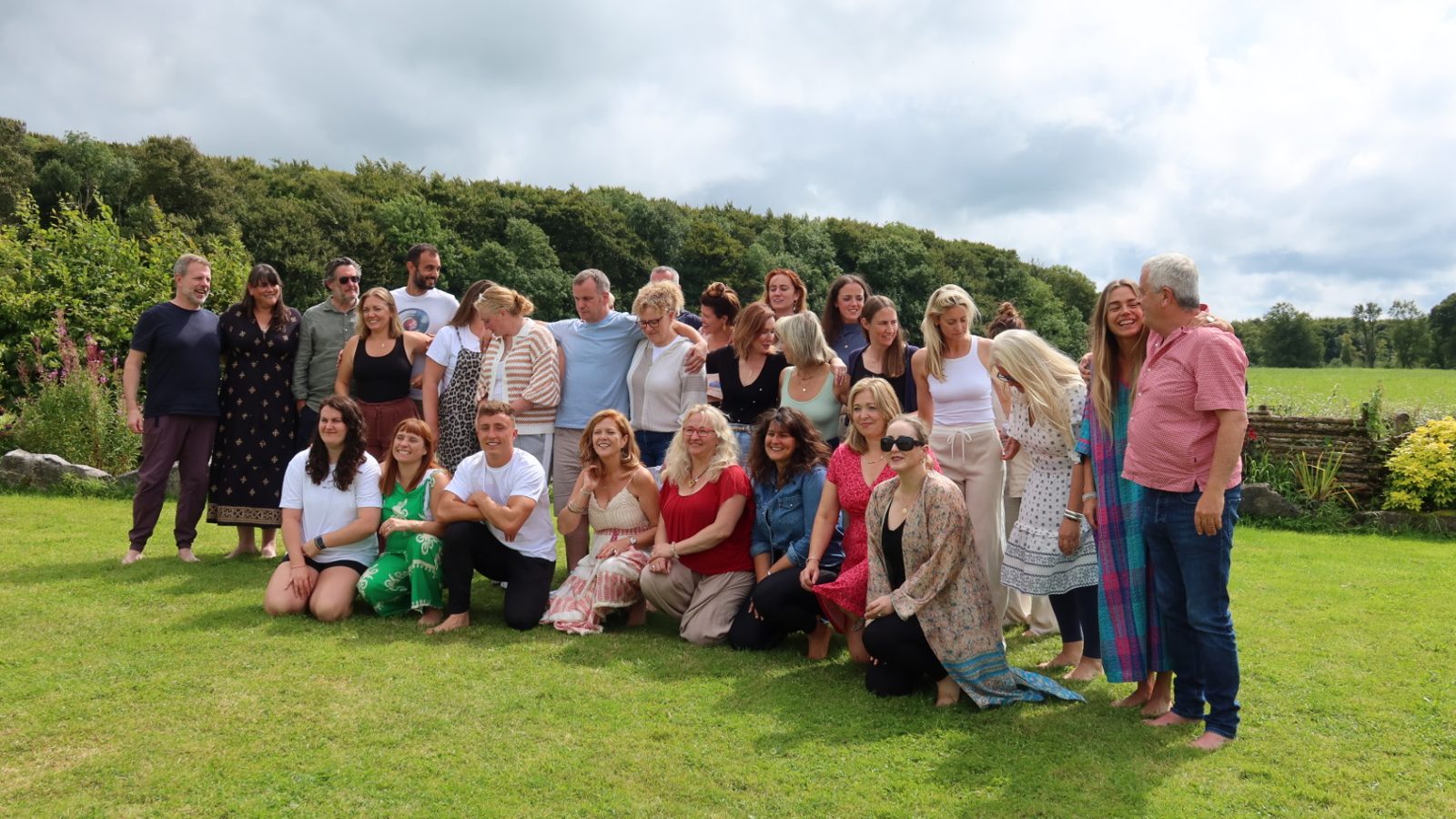
The people who train with me come from all over. Psychotherapists and psychologists with decades of practice. Medical doctors. Mountaineers. Corporate people who are completely new to this world. People who've been deep in spiritual practice for decades, and people who've already trained in other breathwork schools and want a deeper understanding.
Many of them come mainly for the certification. And a lot of them say the same thing at the end: "Wow, I didn't realise how much there would be in this for me, how much personal process this would be. This has been a real threshold in my life."
That's the first thing I'd want you to know about becoming a breathwork facilitator. The skills matter, but the person holding the session matters more. Here's the path, step by step, as honestly as I can lay it out.
What does a breathwork facilitator actually do?
A breathwork facilitator guides people through breathing practices and holds space for whatever comes up. In conscious connected breathwork (new to the term? start with What Is Conscious Connected Breathwork?), that means:
- screening people beforehand and knowing who shouldn't breathe, or who needs a doctor's go-ahead first
- explaining what to expect and agreeing consent and boundaries
- guiding the breath and adjusting it in real time, which far more often means slowing things down than speeding them up
- staying present and regulated when someone cries, shakes, rages or goes very still
- helping people integrate afterwards
- knowing your scope, and when to refer on
Ten years ago, I naively thought breathwork was just huffing and puffing and seeing what would happen. Over time I learned to work with different people in different ways, and to recognise what someone actually needs. That's the real job.
Do you need a qualification to be a breathwork facilitator?
In most countries, breathwork isn't a regulated profession, so there's usually no legal licence. Voluntary bodies such as the Global Professional Breathwork Alliance (GPBA), the International Breathwork Foundation (IBF) and the UK Breathwork Association (UKBA) set the standards instead. That means anyone can call themselves a facilitator after a weekend, which is exactly why a proper training, insurance and professional membership matter. More on this in Breathwork Certification.
Step 1: Build your own breathwork practice
Before you guide anyone, breathe. Do sessions with different facilitators and different styles. Notice what helps you and what doesn't, and how it feels when a facilitator is truly present with you versus performing.
The GPBA's training standards suggest entry criteria for a professional training may include a minimum of 10 breathwork sessions, experience in group work and emotional maturity and stability (GPBA Training Standards). That said, I've had students who were pretty new, a couple of journeys in, who saw the benefit and wanted to offer it to others. We held them step by step. Others arrived with hundreds of hours of training and wanted more. Both can work.
Step 2: Do your own inner work
If I had to pick the single most important thing, it's this: the facilitator has to have done their own work.
Facilitation can be deeply therapeutic, a body-based therapy in its own right. And it's essential that the facilitator doesn't need anything from the client. Not to be liked. Not approval. Not validation. Not to impress them. When you remove those needs, you can actually be present.
That's the art of holding loving presence, and it only comes from meeting your own edges and tender places, knowing them intimately, so that when they show up in someone else you don't need to shut down.
Step 3: Choose a professional facilitator training
I've written a full guide on this: How to Choose a Breathwork Facilitator Training. In short, look for enough hours over enough time, supervised practice on real people, deep safety and trauma-informed teaching, an in-person component, and support after you graduate.
Be wary of weekend certifications. A weekend is simply too much to take in at once: your own personal process, learning to hold others, and all the information. How we study, and how we approach our own learning, dictates how we show up for clients. When you've been through a deep journey yourself over six to twelve months, you understand that your clients' journey takes time too, and you can share that from lived experience. Change is challenging and it takes time. It's important to be honest about that.
Step 4: Learn the science and the safety
You need to understand what connected breathing does in the body (see What Happens in Your Body During a Breathwork Journey) and have a clear process for screening and contraindications (see Is Conscious Connected Breathwork Safe? and Breathwork Contraindications).
Just as important are the somatic skills. In our training that means titration, pendulation, resourcing, and somatic and trauma principles: helping someone build capacity over time rather than pushing them into a dysregulated place.
Step 5: Practise under supervision
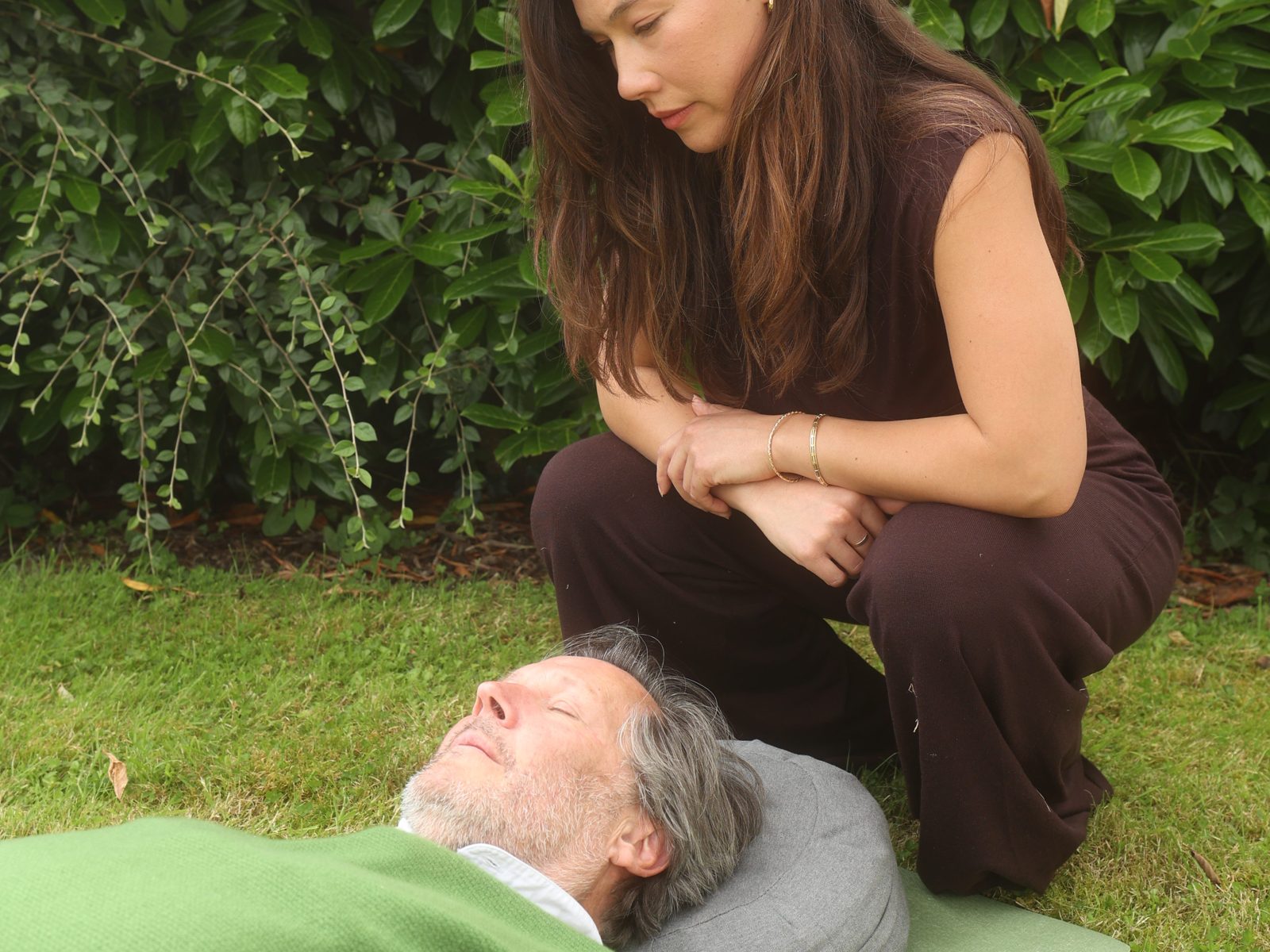
Most of your growth happens in supervised practice. You guide a session, someone experienced reviews it, you get honest feedback, and you go again. In Journey The Breath, you start with short sessions and build up to full ones, completing 16 individual and 4 group facilitation sessions with mentorship and supervision, plus written case studies.
You also learn more than one tool. Alongside conscious connected breathwork, our students learn 12 other daily practices, body- and breath-based, to upregulate, downregulate and balance the nervous system. My favourite is the bow and arch from bioenergetic therapy. The body braces against emotions we don't want to feel, and this practice opens it again, and opens us to the feeling body.
Step 6: Get insured and join a professional body
Sort out professional liability insurance before working with paying clients, and check what your insurer needs from your training. Then consider professional membership. Journey The Breath is listed by the GPBA as an Ethically Compliant Program, so our graduates can pursue GPBA ethically compliant breathworker status. The main bodies are:
- GPBA: an Ethically Compliant Breathworker tier (at least 50 hours over 9 months, plus 8 hours of ethics) and a Certified Professional Breathwork Practitioner tier (at least 400 hours over at least two years, plus 8 hours of ethics) (GPBA).
- IBF: self-nominated professional membership for people holding a relevant certificate from a breathwork training programme or school (IBF).
- UKBA: for UK-based practitioners; professional conscious connected breathwork practitioners need at least 300 hours, with no less than 8 months of core training (UKBA).
Step 7: Look after yourself and build a practice that lasts
Your own embodiment is key, so keep a daily personal breathwork practice. Our training also covers energetic and spiritual hygiene, managing projections, recognising what's yours and what isn't, staying in your own process, getting supervision and making sure you don't take on too much.
Then there's the business side. We cover building a sustainable, ethical practice without becoming a salesperson.
What can you do once you're certified?
Our graduates offer one-to-one and group conscious connected breathwork sessions, online and in person, plus shorter grounding practices clients can use every day. They learn how to hold a session, how to programme different techniques around what a client needs, how to communicate and how to hold space. Many tell me the relational and emotional skills helped not just their facilitation, but their families, friendships and existing work. Reading people is a skill for life.
Dr Dan Delaney, a medical doctor who trained with us, says what he learned has made a big impact on how he supports his patients day to day. He gives them simple tools for anxiety and mental health struggles, and he also offers longer breathwork journeys.
How long does it take to become a breathwork facilitator?
It depends on the training. Professional bodies point to anything from 50 hours over nine months to 400 hours over two years. Journey The Breath holds you for 12 months: six months of online training (21 March to 5 September 2027 for the next cohort), three days in person in Galway (17 to 19 September 2027), then six months of further support through monthly group supervision. The emotional and relational side of this work is slow, and it needs a longer container.
How much does breathwork facilitator training cost?
Prices vary widely. Compare on hours, supervision and support, not price alone. For transparency, Journey The Breath costs €4,000 in full, or 4 monthly payments of €1,000, or 6 monthly payments of €700 (€4,200 total).
Frequently asked questions
Can anyone become a breathwork facilitator?
Most people can learn, but it's not the right time for everyone. You need to be willing to work on your own patterns and take honest feedback. If you're in crisis right now, it's better to get support first. A facilitator training isn't a replacement for therapy.
Do I need a medical or therapy background?
No. Our graduates include medical doctors, psychologists and psychotherapists with decades of experience, and people with no clinical background at all. What you need is a training that teaches safety, screening, trauma-informed practice and when to refer, so you know where your scope ends.
How do I know if I'm ready?
Asking "am I ready?" is a good question. It doesn't mean you're not. It's often a healthy sign that you're taking this seriously and with integrity. On a discovery call I find out where someone is and what they need, and occasionally I'll say it's not the right time.
How many hours of training do breathwork facilitators need?
There's no single legal number. The GPBA sets 50 hours over nine months for its Ethically Compliant tier and 400 hours over two years for its Professional Practitioner tier. The UK Breathwork Association asks for at least 300 hours for professional conscious connected breathwork practitioners.
Can I become a breathwork facilitator online?
You can learn a huge amount online. I've worked in the online space for about 12 years and I'm still amazed what's possible: flexibility, training from home, integrating through the week. But I think in-person practice lets everything land, which is why our training finishes with three days in Galway.
Is a weekend breathwork certification enough?
In my view, no. A weekend asks you to process your own material, learn to hold others and take in all the information at once, which is too intense. How we study dictates how we show up for clients, and real change takes time.
Thinking about training with us?
Journey The Breath is the culmination of many years of my own experience and education. I did a lot of trainings and got a lot from them, but every time I left feeling there was a gap. I've tried to close as many of those gaps as I could. If this feels like your path, have a look at the Journey The Breath conscious connected breathwork facilitator training and book a discovery call. The next cohort starts on 21 March 2027 and is capped at 40.
Sources
- Global Professional Breathwork Alliance, Training Standards, Membership requirements and Journey The Breath listing.
- International Breathwork Foundation, Membership types.
- UK Breathwork Association, Eligibility for Professional Registration.
- Journey The Breath, Facilitator training details.
Related reading: how to become a certified breathwork facilitator in 2027 and breathwork facilitator training cost and accreditation.
